The Everest Base Camp Trek is, without question, one of the greatest walking journeys on Earth. Following in the footsteps of Sir Edmund Hillary and Tenzing Norgay, this iconic 14-day route takes you deep into the heart of the Khumbu Valley — through ancient Sherpa villages, over dramatic suspension bridges, and up to the foot of the world's highest mountain at 5,364 metres.
Having guided hundreds of trekkers to Everest Base Camp over the past two decades, I've written this guide to give you everything you need to know — from physical preparation to packing lists, from permit requirements to altitude sickness prevention. Let's get started.
Why Trek to Everest Base Camp?
Beyond the obvious draw of standing before the world's highest peak, the EBC trek offers an unparalleled cultural immersion. The Khumbu region is home to the Sherpa people — one of the world's most extraordinary mountain cultures — whose monasteries, prayer flags, and mani stones line every trail.
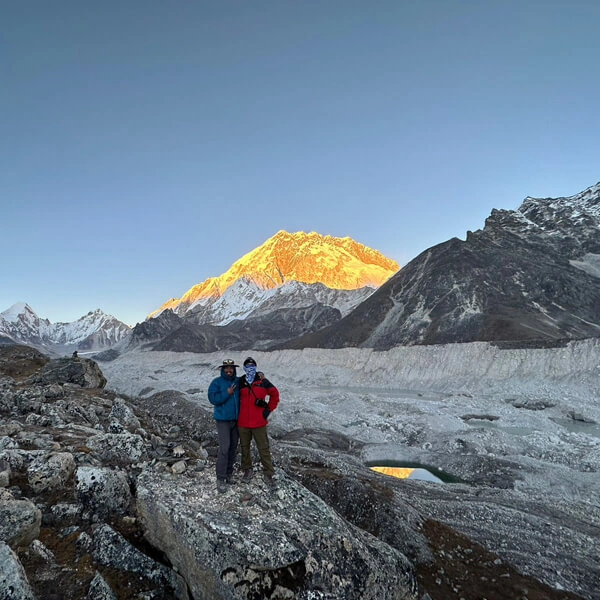
The landscape itself shifts dramatically as you gain altitude: from subtropical forests around Lukla (2,840m) to the stark lunar beauty of the Khumbu Glacier. Along the way, you'll see Ama Dablam (often called the most beautiful mountain in the world), Lhotse, Nuptse, and countless other giants rising above you.
"Standing at Everest Base Camp, watching the Khumbu Icefall groan and creak in the early morning silence — it's a moment that permanently changes how you see the world."
— Saroj Tamang, Head Guide, Hiking in Himalaya
Best Time to Trek to Everest Base Camp
The EBC trek can technically be done year-round, but two seasons offer the best conditions:
- Spring (March to May): The most popular season. Rhododendrons bloom in the lower valleys, skies are generally clear, and the temperature is pleasant. Busy trails, especially in April and May.
- Autumn (September to November): Our personal favourite. Post-monsoon skies are crystal clear, offering stunning mountain views. October is peak season — book well in advance.
- Winter (December to February): Fewer trekkers, discounted prices, but temperatures at altitude drop to -20°C at night. Only for the experienced.
- Monsoon (June to August): Heavy rain, leeches in lower sections, and poor visibility. Not recommended unless you enjoy the lush green solitude.
Pro tip: Book your Lukla flights (or helicopter) at least 3–4 months in advance if travelling in October. Seats sell out quickly and weather cancellations are common — budget 1–2 buffer days in Kathmandu for your return.
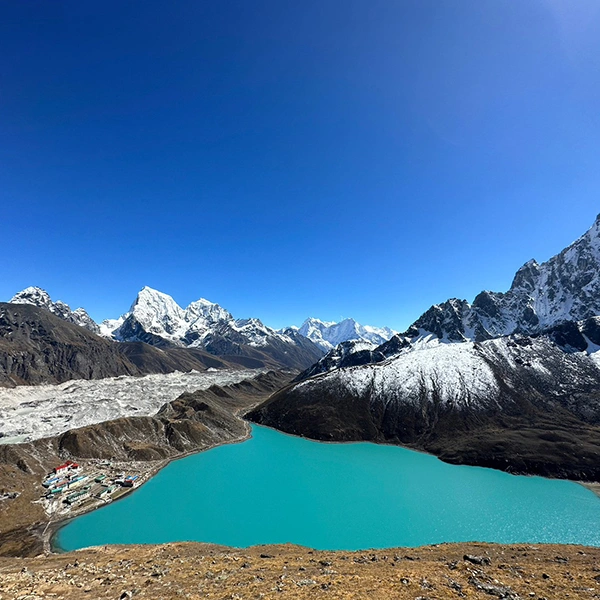
The turquoise Gokyo Lakes sit at 4,700m — an optional but spectacular detour from the main EBC route.
Permits Required for EBC Trek
You'll need two permits to trek to Everest Base Camp:
- Sagarmatha National Park Entry Permit: USD $30 per person. Issued at the national park entrance in Monjo (one day above Namche Bazaar) or in Kathmandu at the Department of National Parks.
- Khumbu Pasang Lhamu Rural Municipality Entry Fee: NPR 2,000 (approx. USD $15). Paid at the Lukla entry checkpoint. Introduced in 2022 to fund local conservation.
If you travel with us, we handle both permits on your behalf — included in the trip cost. No queuing, no paperwork for you.
Altitude Sickness: The Real Challenge
Altitude sickness is the single biggest reason trekkers fail to reach Everest Base Camp. It has nothing to do with fitness — it's a physiological response to reduced oxygen at high altitude, and it can affect anyone regardless of age or experience.
The key rules are simple but non-negotiable:
- Ascend slowly. Never gain more than 500m of sleeping altitude per day above 3,000m.
- Acclimatise properly. Our itinerary includes rest days at Namche Bazaar (3,440m) and Dingboche (4,410m) — crucial for your body to adapt.
- Hydrate. Drink 3–4 litres of water per day.
- Know the symptoms. Headache, nausea, dizziness, and fatigue are warning signs. Never ascend if you feel unwell.
- Carry Diamox. Acetazolamide (Diamox) can help prevent AMS. Consult your doctor before the trek.
Warning: Do not ignore symptoms of High Altitude Cerebral Oedema (HACE) or High Altitude Pulmonary Oedema (HAPE). Both are life-threatening. If a trekker shows confusion, inability to walk straight, or extreme breathlessness at rest — descend immediately and seek medical help.
What to Pack: The Essential List
Packing right can make the difference between a comfortable trek and a miserable one. Below is what I recommend after guiding this route for 20+ years:
Clothing
- Down jacket (at least 600-fill, essential for above 4,000m)
- Waterproof outer shell jacket and trousers
- Thermal base layers (top and bottom) — 2 sets
- Fleece mid-layer
- Trekking trousers (2 pairs) and shorts
- Wool or synthetic trekking socks (4–5 pairs)
- Warm hat, sun hat, and balaclava
- Gloves (liner + waterproof outer)
- Neck gaiter / buff
Footwear
- Waterproof trekking boots (well broken-in before the trek)
- Camp shoes / sandals for teahouse evenings
- Gaiters (optional but useful in snow conditions)
Equipment
- Trekking poles (highly recommended — protects knees on descent)
- Headlamp + spare batteries (essential for early morning starts)
- Sleeping bag rated to -15°C
- Daypack (25–30 litres) + main duffel bag for porter
- Water bottles (2×1 litre) + water purification tablets or filter
- Sunglasses (UV400, glacier glasses above 5,000m)
- Sunscreen SPF50+ and lip balm
- Pulse oximeter (monitors blood oxygen saturation)
Day-by-Day Itinerary Overview
Our standard 14-day EBC itinerary is carefully designed for proper acclimatisation while keeping the experience rich and unhurried.
- Day 1: Arrive Kathmandu. Trek briefing and gear check.
- Day 2: Fly Kathmandu → Lukla (2,840m). Trek to Phakding (2,610m).
- Day 3: Trek to Namche Bazaar (3,440m) — the gateway to the Khumbu.
- Day 4: Acclimatisation day at Namche. Hike to Everest View Hotel for first sight of EBC.
- Day 5: Trek to Tengboche (3,860m) — visit the famous Tengboche Monastery.
- Day 6: Trek to Dingboche (4,410m) via Pangboche.
- Day 7: Acclimatisation day at Dingboche. Hike to Nagarjun Hill (5,100m).
- Day 8: Trek to Lobuche (4,940m).
- Day 9: Trek to Everest Base Camp (5,364m) via Gorak Shep. Return to Gorak Shep to sleep.
- Day 10: Early morning hike to Kala Patthar (5,545m) for sunrise over Everest. Trek down to Pheriche.
- Day 11: Trek to Namche Bazaar.
- Day 12: Trek to Lukla.
- Day 13: Fly Lukla → Kathmandu. Farewell dinner.
- Day 14: Depart Kathmandu.
Optional extension: Add 2 days to include the Gokyo Lakes side trip — stunning turquoise lakes at 4,700m with panoramic views from Gokyo Ri (5,357m). One of the best decisions many of our trekkers have ever made.
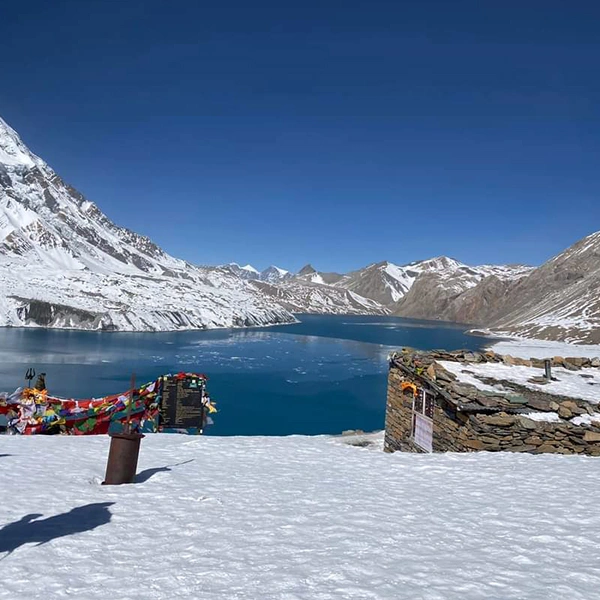
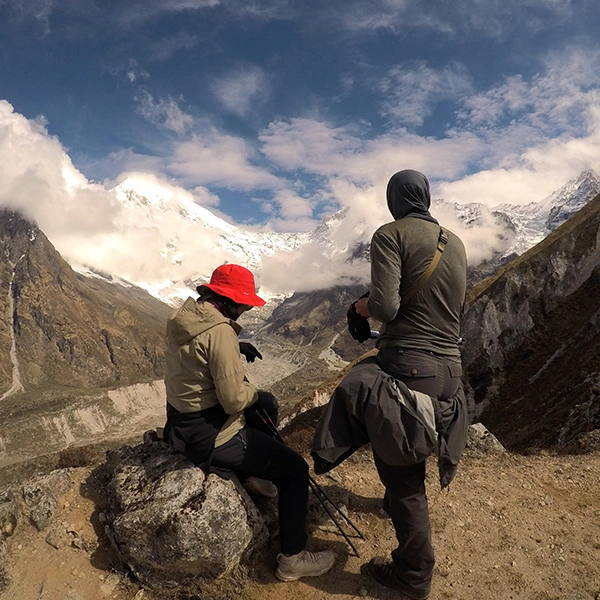
The high-altitude trail between Lobuche and Gorak Shep — you're above 5,000m, the air is thin, and the scenery is otherworldly.
Cost Breakdown: What Does EBC Trek Cost?
The total cost depends on how you trek (agency vs independent), your accommodation choices, and your spending habits. Here's a realistic breakdown for a guided group trip:
- Agency package (all-inclusive): $1,200 – $1,800 per person (includes Lukla flights, permits, accommodation, meals, guide, porter)
- Kathmandu hotel (2 nights): $30 – $120/night
- Personal gear: $200 – $600 (if renting in Kathmandu Thamel)
- Travel insurance (mandatory): $80 – $200
- Tips for guide and porter: $150 – $250 (customary and appreciated)
- Visa fee: $30 (15 days), $50 (30 days)
Total estimated budget: $1,700 – $3,000 per person for the full trip from Kathmandu.
Booking Your Everest Base Camp Trek
If you're ready to experience one of the world's most iconic journeys, we'd love to guide you. At Hiking in Himalaya, every EBC trek is led by certified IFMGA guides with 10+ years of Khumbu experience. Small group sizes (maximum 10 trekkers), transparent pricing, and genuine care for every client.
View our full EBC Trek itinerary and book your place →
Saroj Tamang
Head Guide & Founder · 20+ Years in the Khumbu
Saroj was born and raised in Solukhumbu district and has spent his life guiding trekkers through Nepal's most iconic mountain routes. An IFMGA-certified guide and third-generation Sherpa, he founded Hiking in Himalaya to share his deep love of the Himalayas with the world.